A comprehensive analysis of domain strategy, content architecture, SEO gaps, competitive positioning, social media presence, and a clear roadmap to reclaim the category Jay Abraham created — before the internet gurus finish claiming it.
Jay Abraham's online presence faces a critical strategic paradox: the man Forbes called "possibly the greatest marketing expert alive today" is being outranked, out-followed, and out-distributed by people who learned marketing from his books. Domain consolidation is partially complete, content strategy leaves billions in organic search value on the table, and a second active site is silently creating brand fragmentation — while a generation of internet gurus builds digital empires on the frameworks Jay created.
The man who has generated $50 billion in client results is nearly invisible to Google for every commercial-intent keyword in his category. His proprietary frameworks are being taught — and ranked for — by other people's websites. His 800+ hours of content sit unindexed. His Instagram is a stream of low-production videos that would fail his own brand audit. And the next generation of CEOs who need him most is discovering Hormozi on YouTube instead.
The good news: every problem found in this audit is fixable, and the assets already exist to fix them. What's missing isn't content, credibility, or frameworks. What's missing is a system to deploy what already exists — and someone who will hold the team accountable to doing it.
The business education space has been colonized by a new class of internet gurus — Alex Hormozi, Grant Cardone, Russell Brunson, and dozens of others — who have built massive digital followings by packaging and distributing business growth advice at scale. They are loud, prolific, and algorithmically dominant. They are also, in almost every case, teaching principles that Jay Abraham pioneered decades before they had an audience.
This creates an extraordinary opportunity that no other person on earth can claim: Jay Abraham is the original source. He is not a derivative. He is not a packager of other people's ideas. He is the architect of the frameworks these gurus are now monetizing. The Strategy of Preeminence, the Three Ways to Grow a Business, Joint Venture Marketing, Risk Reversal — these are Jay's intellectual property, and the internet has never heard it from him directly at scale.
While internet gurus sell you tactics, Jay Abraham gives you transformation. They teach you what to do. Jay shows you why it works — and has the documented proof across 10,000 companies to back it up. The gurus are loud. Jay is right. The goal of this engagement is to make that distinction undeniable, visible, and impossible to ignore for every CEO and serious business owner who is currently settling for a guru when they could have the original.
"When CEOs need a Report, they call Bain. When they need a Result, they call Abraham." This line — currently buried on abraham.global — is the most powerful positioning statement in Jay's entire brand. It belongs on the homepage of abraham.com, and it belongs in every piece of content he publishes.
Jay's team made the right call consolidating the secondary name domains. But abraham.global is a live, professionally built WordPress site that duplicates abraham.com's core messaging, services, testimonials, and target audience — while introducing some new and arguably stronger positioning language. It is currently not indexed by search engines, meaning it generates zero organic traffic. This creates a time bomb: the moment abraham.global gets indexed or starts accumulating backlinks, it will directly compete with abraham.com for authority.
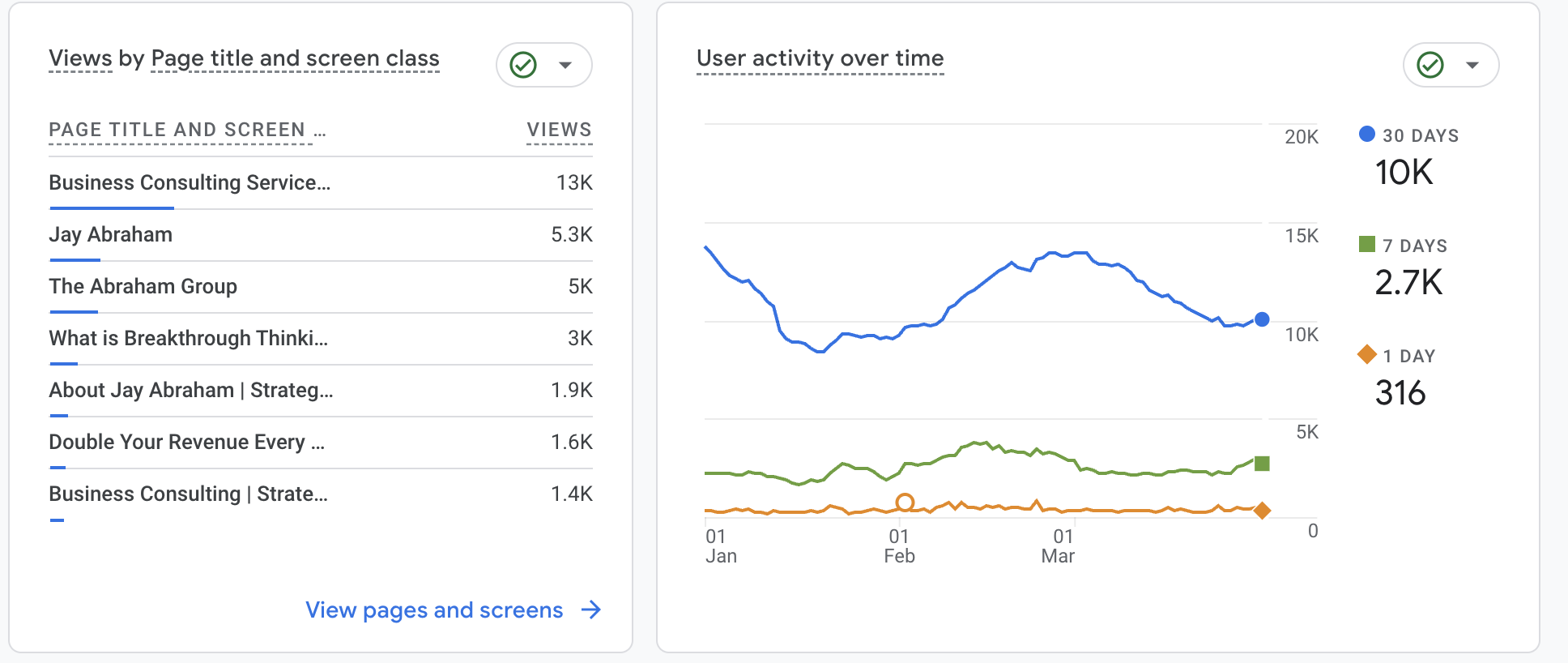
The Google Analytics data for abraham.com (January 1 – March 31, 2026) tells a precise story that corroborates every strategic recommendation in this audit. The site is growing — active users up 11.8%, sessions up 8.1%, key events up 14.3%. But the growth is happening in the wrong channels, the conversion rate is critically low, and the traffic composition reveals a site that is serving an existing audience rather than acquiring a new one.
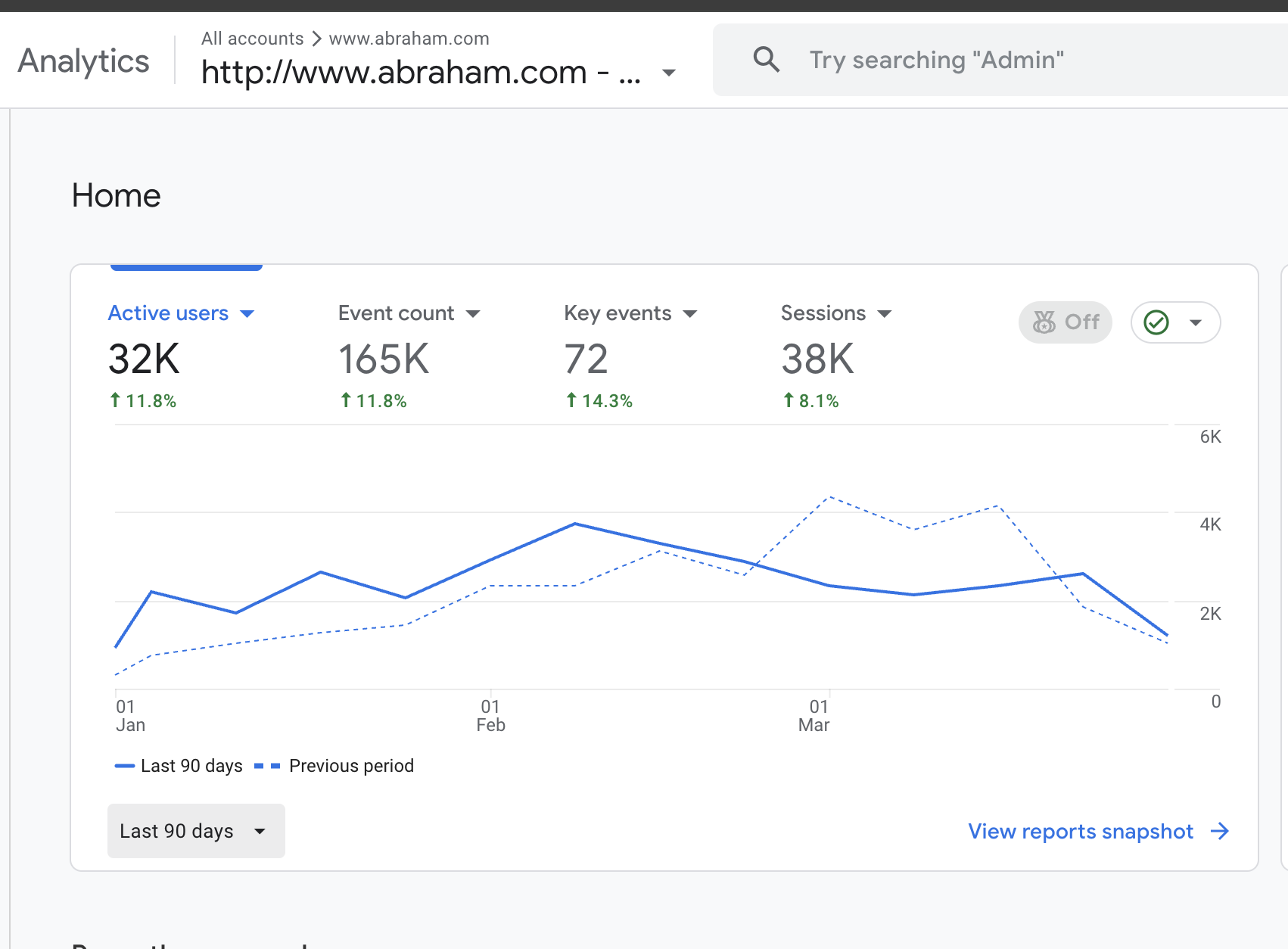
The headline numbers look healthy. But 72 conversions from 32,000 visitors is a 0.22% conversion rate — on a site where the minimum engagement is a $25,000 consulting program. The site is not underperforming because Jay lacks credibility. It is underperforming because the traffic composition is wrong: most visitors are not buyers, and the buyers who are searching for Jay's expertise are not finding the site at all.
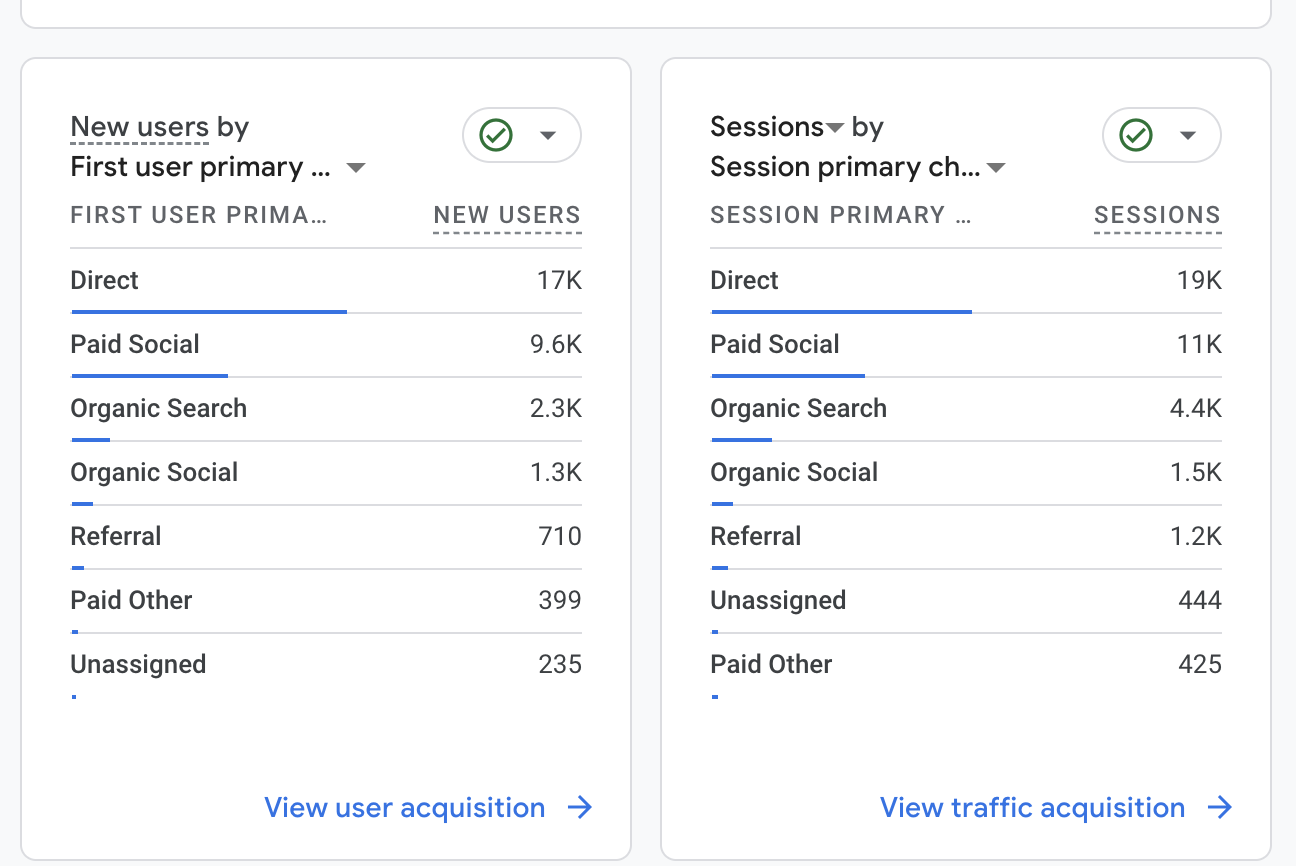
The traffic channel breakdown is the single most important data point in this entire audit. Organic search accounts for only 7.5% of users — but it drives 31.3% of all key events (conversions). Organic search visitors spend an average of 1 minute 35 seconds on the site — six times longer than paid social visitors (9 seconds). These are buyers. They are searching for what Jay offers, finding the site, and converting at a dramatically higher rate than any other channel.
The implication is direct: the channel with the highest buyer intent, the highest engagement, and the highest conversion rate is the channel receiving the least investment. The 5 target keywords identified in the SEO Gap Analysis are not theoretical — they represent a documented, high-converting audience that is currently finding competitors instead of Jay.
The 4 SEO Pillar Pages (Section 05) target exactly these organic search buyers — each page is built around one of the 5 confirmed keywords where Jay is absent and competitors rank without his credibility. We write the definitive resource for each topic, optimized for the search terms already converting at 31.3%, and link each page directly to the consulting intake form. This is the highest-ROI content investment available on the site.
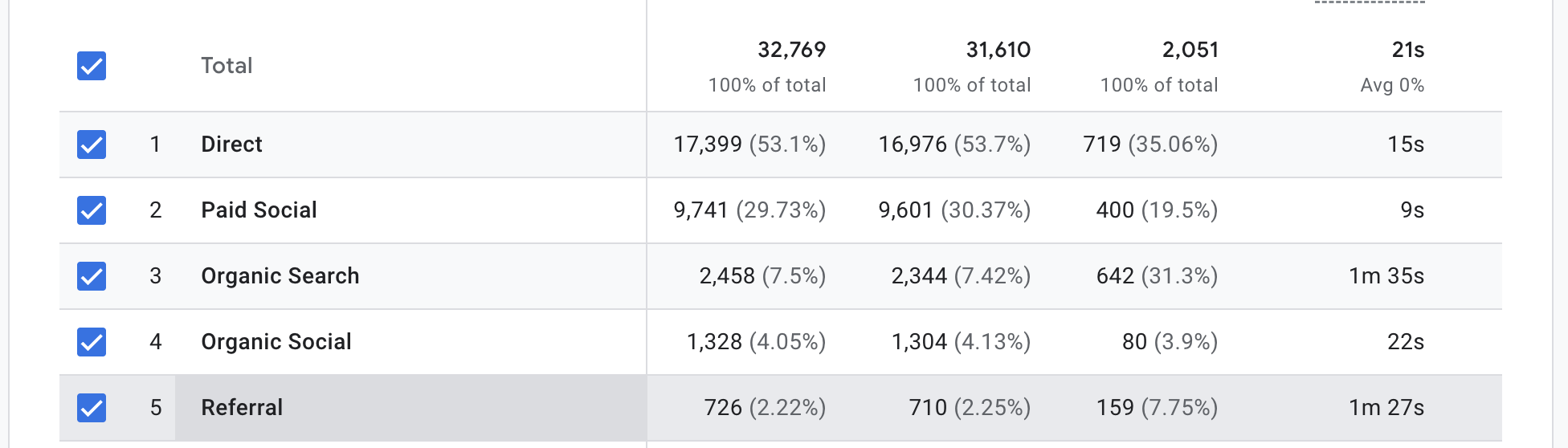
| Channel | % of Users | % of Conversions | Avg. Engagement | Verdict |
|---|---|---|---|---|
| Organic Search | 7.5% | 31.3% | 1m 35s | Highest ROI — Underinvested |
| Referral | 2.2% | 7.75% | 1m 27s | High Quality — Validates JV Strategy |
| Direct | 53.1% | 35.1% | 15s | Existing Audience — No New Buyers |
| Organic Social | 4.1% | 3.9% | 22s | Proportional — LinkedIn Growth Needed |
| Paid Social | 29.7% | 19.5% | 9s | Largest Paid Channel — Lowest Engagement |
Paid social drives 29.7% of all users — the second-largest channel — but produces only 19.5% of conversions and a 9-second average engagement time. Nine seconds is not a visit; it is a scroll and a close. This is not a creative problem or a targeting problem in isolation. It is a structural problem: paid social is driving volume to a site that has no content to hold a cold audience. Without pillar pages, without a blog, without a content engine, paid social traffic has nowhere to go after the homepage. The 4-pillar-page strategy in Section 05 directly addresses this: each pillar page becomes a landing destination for paid social campaigns with specific, high-intent content that matches the searcher's actual question.
Each of the 4 Pillar Pages doubles as a paid social landing destination. Instead of sending ad traffic to the homepage — where a cold visitor has no context — campaigns point to a specific page that answers the exact question the ad raised. A CEO who clicks "how to grow revenue without new customers" goes to a 2,000-word authoritative page with Jay's Three Ways framework, a case study, and a single CTA. The 9-second bounce becomes a 90-second read and a qualified inquiry.
53.1% of all users arrive via direct traffic — meaning they typed abraham.com directly or came from a bookmark. This is a strong signal of brand loyalty among an existing audience. It is also a warning: a site where more than half of all visitors already know the brand is not growing its addressable market. The CEOs and founders who have never heard of Jay Abraham — the exact buyers the content engine is designed to reach — are not in this 53%. They are on Google searching for "how to scale a business from 1 million to 10 million" and finding ProCFO Partners instead.
The Content Engine (Section 16) is the top-of-funnel that turns strangers into direct traffic. By publishing authoritative pillar pages, a weekly LinkedIn article series, and a YouTube channel built on Jay's existing 1,000+ hours of recorded content, we create multiple discovery paths for buyers who have never heard his name. Every piece of content is designed to rank, be shared, and end with a single conversion action — moving a new visitor from "I just found this" to "I need to speak with Jay."
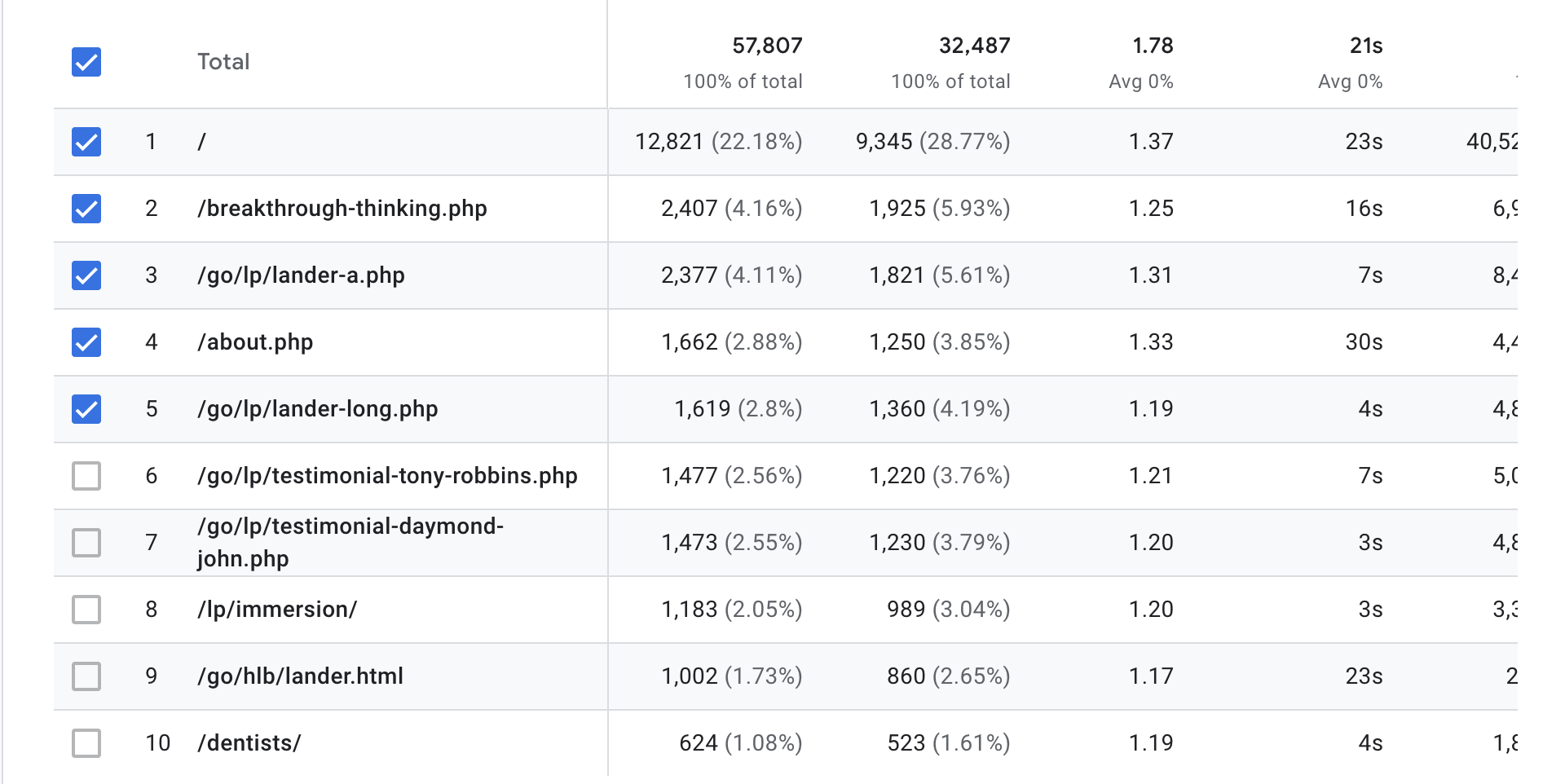
The top 10 pages by views are almost entirely homepage, landing pages, and testimonial pages — with one exception: "What is Breakthrough Thinking" at 3K views. There is not a single pillar page in the top 10. No "how to grow a business" page. No "joint venture marketing strategy" page. No "risk reversal" page. The content that would capture organic search traffic — the highest-converting channel — does not exist on the site. This is the structural gap that the 4-pillar-page strategy closes.
We build the 4 missing pillar pages that should already be in this top-10 list: How to Scale from $1M to $10M, Joint Venture Marketing Strategy, How to Grow Revenue Without New Customers, and How to Double Your Business Revenue. Each is a 2,000–3,000-word authoritative resource written in Jay's voice, structured for Google's featured snippet format, and internally linked to the consulting intake. Within 90 days of publishing, these pages are designed to displace the generic competitors currently occupying those SERP positions.
Referral traffic is only 2.2% of users — but it drives 7.75% of key events and produces a 1-minute-27-second average engagement time, second only to organic search. Referred visitors are pre-qualified: someone they trust sent them. This is the exact dynamic that the Strategic Partnership Activation section (Section 22) is designed to scale. A formal content exchange with Russell Brunson, Brendon Burchard, or Alex Hormozi — where Jay's frameworks are featured in their newsletters, podcasts, or courses — would directly amplify the highest-quality traffic channel on the site.
The Strategic Partnership Activation (Section 22) formalizes what the referral data already proves is working. We identify 8–12 partners in Jay's existing network — Brunson, Burchard, Hormozi, Cardone — and build a structured content exchange: Jay contributes a chapter, a framework breakdown, or a guest appearance; they send their audience to a dedicated referral landing page on abraham.com. Given that referred visitors already convert at nearly 4x the rate of paid social visitors, doubling the referral channel from 2.2% to 5% of traffic would add more qualified leads than tripling the paid social budget.
The GA4 data does not reveal a site in trouble. It reveals a site that has optimized for the wrong audience. The 32,000 visitors who arrived in the last 90 days largely already knew Jay Abraham. The plan in this audit is not about fixing what is broken — it is about building the channels that reach the 32 million business owners who have never heard of him, and who are actively searching for exactly what he offers.
Abraham.com functions effectively as a high-ticket consulting conversion tool. Social proof is exceptional — testimonials from Tony Robbins, Daymond John, Russell Brunson, Dave Asprey, and Stephen M.R. Covey. Fortune 500 client logos. Clean, premium design. Transparent pricing from $25K to $300K+. The site is built to convert people who already know Jay.
The diagnosis: Abraham.com is a conversion tool for people who already know Jay. It does absolutely nothing to capture organic demand from people who need Jay's frameworks but don't yet know his name. It has no blog, no content engine, no lead magnets, and no mechanism for discovery. It is a closing room with no front door.
| Gap | Impact | Status |
|---|---|---|
| Blog / content engine | Zero articles, zero educational content, zero organic search magnets | Missing |
| Transcribed content | 800+ hours of content exists but none lives as indexable text on the domain | Missing |
| Case study pages | $50B claim has no supporting deep-dive content for Google to index and verify | Missing |
| Lead magnet funnel | No free tools, assessments, or resources to capture non-buyer email addresses | Missing |
| Podcast landing pages | Podcasts not hosted or transcribed on the domain — no SEO value captured | Missing |
| Framework pillar pages | No dedicated, optimized pages for Preeminence, Three Ways to Grow, JV Marketing | Missing |
| Comparison content | Nothing targeting "best business growth consultant" or category-defining searches | Missing |
Across four competitor sites — TonyRobbins.com, CEOCoachingIntl.com, Boolkah.com, and BrianTracy.com — eight structural elements consistently separate high-converting advisory sites from low-converting ones. Jay's site is scored against each pattern below.
| Pattern | Tony Robbins | CEO Coaching | Boolkah | Jay's Site |
|---|---|---|---|---|
| Named celebrity/client endorsements | ✓ Strong | ✓ Company names | ✓ Reviews | ✓ Has this |
| Specific verifiable outcome stats | ✓ Stanford study | ✓ CAGR data | ✓ 87% hit records | ⚠ Needs strengthening |
| Low-friction entry point (quiz/diagnostic) | ✗ | ✓ Health Check | ✓ Discovery Call | ✗ Missing |
| Self-segmentation (who are you?) | ✓ 7 life areas | ✓ Coaching types | ✓ Services | ⚠ Partial |
| Scarcity / selectivity signal | ✗ | ✗ | ✗ | ✓ Application form |
| Case studies with named outcomes | ✗ Generic | ✓ Strong | ✓ Moderate | ✗ Missing |
| Video in hero | ✓ | ✗ | ✗ | ✗ |
| Review count / NPS score | ✗ | ✓ NPS 64.91 | ✓ 350 reviews | ✗ Missing |
Abraham.com ranks for approximately 3,000 keyword phrases — a fraction of what someone with Jay's depth of expertise, proprietary frameworks, and 40-year reputation should command. The realistic potential is 10x that number, and the content to get there already exists in Jay's archive.
These are high-value, commercial-intent keywords where Jay should dominate — but doesn't appear at all. Every current #1 is generalist content: media sites, SaaS tools, or small coaches with no real case studies. Jay's answer would be categorically better — 40 years of documented results across 1,000 industries.
| # | Keyword | Est. Monthly Volume | Who Ranks Now (Not Jay) |
|---|---|---|---|
| 1 | how to scale a business from 1 million to 10 million | 300–600/mo | ProCFO Partners, Bessemer VC, Ignite Spot |
| 2 | how to grow revenue without new customers | 400–800/mo | Quicksprout, Bluevine, ReconInsight |
| 3 | joint venture marketing strategy | 400–900/mo | Steamaster Academy, Predictable Profits — abraham.com absent (only Abraham Club secondary site appears) |
| 4 | how to grow a business exponentially | 500–1,200/mo | Entrepreneur.com, small coaches, SaaS blogs |
| 5 | how to double your business revenue | 400–800/mo | Forbes, Inc., generic business blogs |
Projected impact at #1: 7,200–12,600 clicks/year across all 5 keywords. At Jay's conversion rate and deal size, that translates to 7–25 new inbound inquiries per month from buyers already searching for exactly what he offers. He can realistically reclaim all 5 rankings within 6–12 months with strong pillar pages.
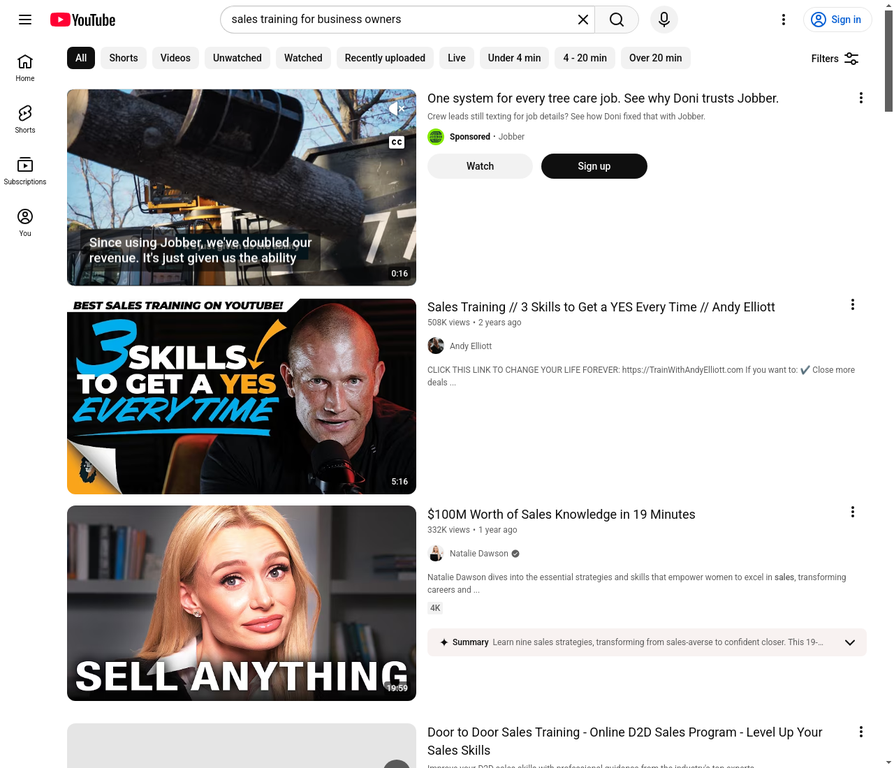
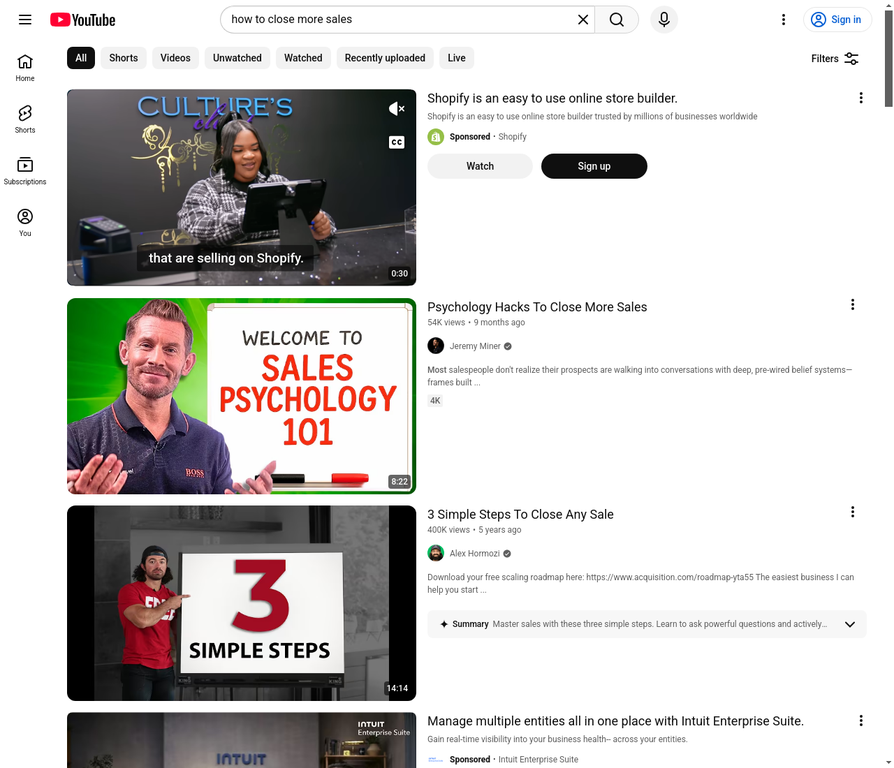
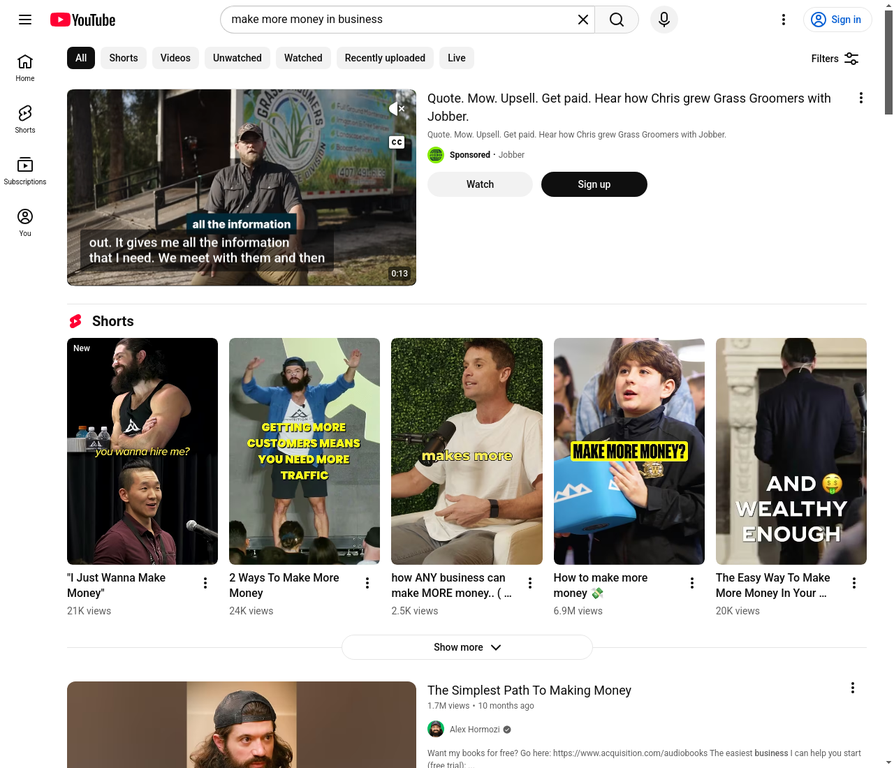
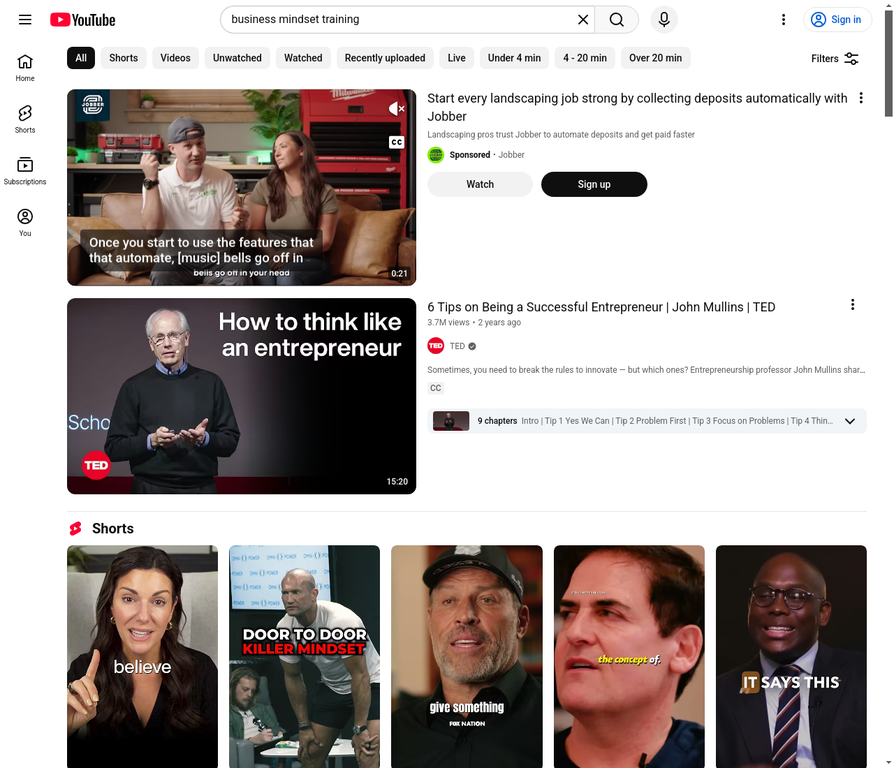
Today's business owner doesn't open a browser and search Google for a consultant. They open YouTube. The searches below are what a CEO, entrepreneur, or serious operator actually types when they have a growth problem. These are the exact terms Jay has 40 years of answers for. What they find instead: Alex Hormozi, Andy Elliott, Grant Cardone, Tony Robbins — and zero results from Jay Abraham. These screenshots were captured in March 2026.
Jay's channel appears when you search his name. But branded searches only come from people who already know him. The entire opportunity is in non-branded discovery — and that's where Hormozi, Cardone, Elliott, and Robbins are eating his lunch every single day.
These are the four canonical pillar pages that need to be built and published on abraham.com as the foundation of the SEO strategy. Each URL is the definitive, permanent home for that framework — all social content, YouTube videos, and email newsletters link back to these pages. The URLs below are the exact targets from the content strategy; they should not be changed once published as inbound links will accumulate over time.
| # | Pillar Page | Target URL | Primary Keyword | Est. Monthly Volume | Word Count | Priority |
|---|---|---|---|---|---|---|
| 1 | Three Ways to Grow a Business | abraham.com/three-ways-to-grow-a-business/ | how to grow a business exponentially | 500–1,200/mo | 3,000–5,000 words | Day 1–30 |
| 2 | The Strategy of Preeminence | abraham.com/strategy-of-preeminence/ | strategy of preeminence | Already ranking | 3,000–5,000 words | Day 1–30 |
| 3 | Joint Venture Marketing | abraham.com/joint-venture-marketing/ | joint venture marketing strategy | 400–900/mo | 3,000–5,000 words | Day 1–30 |
| 4 | Risk Reversal | abraham.com/risk-reversal/ | risk reversal marketing | 200–500/mo | 3,000–5,000 words | Day 31–60 |
Page Outlines — H2 Structure Per Pillar
abraham.com/three-ways-to-grow-a-business/
Day 1–30
H1: The Only Three Ways to Grow Any Business — And How to Use All Three
Lead magnet: "The 10-Minute Revenue Audit Worksheet" (PDF/fillable) · Archive sources: "Three Ways" seminar recordings, host-beneficiary clips, Dan Lok / Lewis Howes appearances
abraham.com/strategy-of-preeminence/
Day 1–30
H1: The Strategy of Preeminence: How to Become the Only Logical Choice for Your Clients
Lead magnet: "The Preeminence Positioning Checklist" (PDF) · Archive sources: Seminar recordings on trusted advisor positioning; podcast appearances on Seth Godin / Simon Sinek comparisons
abraham.com/joint-venture-marketing/
Day 1–30
H1: Joint Venture Marketing: How to Multiply Your Revenue by Accessing Other People's Customers, Trust, and Distribution
Lead magnet: "JV Partner Finder Worksheet + Outreach Scripts" (PDF) · Archive sources: Host-beneficiary seminar recordings; dozens of documented deal structures across industries
abraham.com/risk-reversal/
Day 31–60
H1: Risk Reversal: How Removing All the Risk From the Buyer's Decision Transforms Your Business
Lead magnet: "The Risk Reversal Language Library — 50 Guarantee Templates" (PDF) · Archive sources: "Risk Reversal" seminar material; documented examples across all categories
This matrix shows how each pillar page links to the others — transforming four standalone pages into a fully interlocking SEO architecture. Each link passes domain authority between pages and keeps the reader inside Jay's ecosystem.
| FROM ↓ TO → | Three Ways | Preeminence | JV Marketing | Risk Reversal |
|---|---|---|---|---|
| Three Ways | — | Links to Preeminence (retain customers once acquired) | Links to JV Marketing (fastest execution of the "more customers" lever) | Links to Risk Reversal (removes friction from ATV & frequency levers) |
| Preeminence | Links to Three Ways (tactical execution of the preeminence philosophy) | — | Links to JV Marketing (trust-based partner outreach as preeminence in action) | Links to Risk Reversal (the tactical trust mechanism that proves preeminence) |
| JV Marketing | Links to Three Ways (JV as the "more customers" lever in action) | Links to Preeminence (why host partners say yes — trust & authority) | — | Links to Risk Reversal (reducing the host's perceived risk in the JV deal) |
| Risk Reversal | Links to Three Ways (risk reversal accelerates all three growth levers) | Links to Preeminence (risk reversal as the philosophical expression of trust) | Links to JV Marketing (how to use risk reversal to close JV deals faster) | — |
Why this matters for SEO: Each internal link passes PageRank between pages, signals topical authority to Google, and keeps the reader inside Jay's ecosystem. A visitor who lands on "Three Ways to Grow" via an organic search and then clicks to "JV Marketing" has a dramatically higher probability of converting — they're self-qualifying through the framework architecture. The goal is that no pillar page is a dead end.
Why these four first: These are Jay's four most-cited frameworks — the ones competitors are already ranking for. Each pillar page should be 3,000–5,000 words, include a downloadable PDF lead magnet (the Abraham-101.pdf asset is a natural starting point for the Three Ways page), and interlink with every related article published in the content engine. Together they form the SEO spine of the entire content strategy. The cross-pillar internal linking map ensures each page passes authority to the others.
Every successful modern thought leader has built a content engine. Jay has the content — it just isn't deployed online. The numbers below represent the current state as of March 2026.
| Dimension | Jay Abraham | Hormozi | Brian Tracy | Tony Robbins | Brunson |
|---|---|---|---|---|---|
| Domain consolidation | ⚠️ Partial (global issue) | ✅ Single | ✅ Single | ✅ Single | ⚠️ Dual |
| Educational blog | ❌ None | ✅ Extensive | ✅ Extensive (500+ posts) | ✅ Extensive | ✅ Moderate |
| YouTube presence | ❌ 53K subs | ✅ 4M+ subs | ✅ 1.9M subs | ✅ 2.6M subs | ✅ 400K+ |
| Owned podcast | ⚠️ Sporadic | ✅ Active | ✅ Active | ✅ Active | ✅ Active |
| Free lead magnets | ❌ None | ✅ Aggressive | ✅ Extensive (reports, guides) | ✅ Multiple | ✅ Book funnels |
| SEO-optimized content | ❌ ~3K keywords | ✅ Fast-growing | ✅ Strong (100K+ keywords) | ✅ Massive | ✅ Strong |
| Conversion design | ✅ Excellent | ✅ Clean | ✅ Course-focused | ✅ Excellent | ✅ Funnel-focused |
| Social proof depth | ✅ Unmatched | ⚠️ Growing | ✅ Strong (1,000+ companies) | ✅ Strong | ✅ Strong |
| Proven track record | ✅ 40 yrs / $50B | ⚠️ ~10 years | ✅ 40+ years / 1,000+ cos. | ✅ 40+ years | ⚠️ ~15 years |
| ✓ | Premium positioning — $25K minimum filters perfectly for ideal clients |
| ✓ | Best-in-class social proof — Robbins, Daymond John, Brunson, Covey |
| ✓ | Domain redirects properly configured — link equity consolidated |
| ✓ | Framework pages exist with dedicated URLs — foundation is there |
| ✓ | Transparent pricing removes friction for qualified buyers |
| ✓ | Fortune 500 logo wall — instant trust signal |
| ✓ | 800+ hours of content archive — raw material for a dominant engine |
| ✓ | 40-year track record — no competitor can manufacture this |
| ✗ | Zero organic discovery — only converts traffic that already knows Jay |
| ✗ | 800+ hours of content sitting unused and unindexed |
| ✗ | Proprietary frameworks ranking for competitors, not Jay |
| ✗ | No email capture for non-buyers — pipeline leak |
| ✗ | No case study depth behind the $50B claim |
| ✗ | No YouTube, podcast, or social content strategy |
| ✗ | Instagram: 75K followers, low-production content, no studio |
| ✗ | LinkedIn: 21,600 personal followers with no consistent posting strategy — the audience exists, the content engine does not |
Abraham.global is a fully built, professionally designed WordPress site running as a parallel property — and it's creating exactly the brand fragmentation and SEO cannibalization problem this audit was asked to investigate. It is branded as "JAY ABRAHAM GLOBAL" and functions as a full consulting services site with its own navigation, service pages, testimonials, lead capture, an AI chatbot, and new positioning language including "Dynamic Breakthrough" and "Breakthrough Consulting vs. Management Consulting."
| # | Problem | Risk Level |
|---|---|---|
| 1 | Not indexed by Google. Consuming development resources while generating zero organic discovery. Functions as a glorified landing page. | Active |
| 2 | Duplicate content across two domains. Same audience, same services, same testimonials, same claims. Textbook cannibalization waiting to happen the moment it gets indexed. | Critical |
| 3 | Brand message divergence. Free sessions on .global vs. $25K minimum on .com. A prospect encountering both will wonder which is real — and which Jay to trust. | Critical |
| 4 | Link equity splitting. Every backlink earned by .global is a link stolen from .com's domain authority. Two domains fighting for the same authority. | Growing |
| 5 | Best copy trapped on wrong domain. "When CEOs need a Report they call Bain — when they need a Result they call Abraham" is sharper than anything on abraham.com. It belongs on the primary site. | Ironic |
Consolidate the best content INTO abraham.com, then 301 redirect abraham.global. Migrate the "Dynamic Breakthrough" positioning, the Strategic Makeover Day funnel, the lead magnet (free book + letter series), the "Bain vs. Abraham" headline, and the updated testimonial layouts — then redirect the domain. Best of both worlds, zero split, full authority consolidated.
Jay's Instagram (@realjayabraham) has 75,000 followers and 1,733 posts. That's a real audience. The problem is what they see when they arrive. The current content is predominantly low-production video clips — talking-head footage with inconsistent framing, variable audio quality, and no recognizable studio environment. For a man whose brand is built on being the world's highest-paid marketing consultant, the production quality of his Instagram sends the opposite signal.
The visual brand problem: When a CEO is referred to Jay Abraham and visits his Instagram, they should see a man who commands $300,000 consulting fees. Instead, they see content that looks indistinguishable from a mid-level business coach. The gap between the $50B positioning and the Instagram aesthetic is jarring — and it costs Jay credibility before a single word is read.
Every major thought leader in Jay's competitive set films in a dedicated, professionally designed studio environment. Hormozi's studio is clean, branded, and instantly recognizable. Cardone films in a high-energy set that reinforces his positioning. Brunson's content is polished and consistent. The studio is not just a backdrop — it is a brand signal that communicates: this person takes their craft seriously.
Jay's content currently signals the opposite. The solution is not more content — it is better-produced content from a permanent, professional filming environment.
The studio problem has two distinct solutions that should run simultaneously — not as alternatives, but as a combined system. The first is a quarterly high-volume shoot. The second is a permanent home studio that keeps the content engine running between shoots. Together, they create a content operation that is sustainable, scalable, and requires minimal time from Jay.
The quarterly shoot handles volume. But between shoots, Jay needs the ability to respond to news cycles, post timely commentary, and maintain a consistent presence without waiting 90 days for the next production run. That requires a permanent home studio — always on, always ready, zero scheduling friction.
The studio infrastructure solves the production problem. But production without strategy is just expensive noise. The model proposed here is clear: Luke provides the content strategy, the editorial calendar, the quarterly shoot brief, the clip selection framework, and the positioning direction. Jay's team — or a production partner — handles the filming, editing, and distribution.
Jay does not need to become a content creator. He needs to sit in a professional studio — quarterly in Pensacola for volume, and at home for velocity — and do what he already does: talk about business strategy. A system captures, packages, and distributes that content across every platform where his buyers live. The content already exists in Jay's mind. The infrastructure to capture it does not yet exist. That is what this engagement builds.
The ideal abraham.com combines the best conversion design already in place with a content engine that generates organic discovery. The architecture below transforms the site from a closing room into a complete authority hub — one that captures, converts, and nurtures at every stage of the buyer journey.
This is not a theoretical roadmap. It is a sequenced execution plan built around what Jay's team can realistically deploy, with measurable outcomes at each phase. The strategy comes from Luke. The execution comes from Jay's team. The accountability comes from weekly check-ins against this roadmap.
This is not a strategy deck. This is a week-by-week execution roadmap. Luke provides the strategy and content direction. Jay's team deploys it. Every deliverable below has a clear owner, a deadline, and a measurable outcome. The plan is built in three phases — Foundation, Engine, and Domination — each building directly on the last.
Jay Abraham teaches clients to find "hidden assets, overlooked opportunities, and undervalued possibilities." His own web presence is the textbook case study — and the most compelling proof of concept for what this engagement can accomplish.
800+ hours of content sitting unindexed, invisible to search engines. The raw material for a dominant content engine already exists — it just hasn't been deployed. This includes Abraham-101.pdf — a publicly accessible document currently sitting on an S3 bucket with no strategic deployment. Redeveloped and redesigned, it becomes a premium opt-in lead magnet that anchors the email acquisition funnel.
Proprietary frameworks being taught — and ranked for — by other people's websites. Jay's intellectual property generates organic traffic for everyone except Jay.
A personal brand with Fortune 500 credibility, 40 years of proof, and unmatched social proof — that generates almost zero organic discovery. The conversion design is world-class. It just has no traffic to convert.
Every week without a content strategy is another week where Alex Hormozi, Grant Cardone, and management consulting firms capture the organic traffic that should be going to the person Forbes calls the greatest marketing mind alive. The gurus are winning the distribution war. Jay is winning the credibility war. The goal is to win both.
Jay, I didn't build this audit because someone asked me to. I built it because I saw what you're leaving on the table and it kept me up at night. That's how I operate — I see the gap between where a brand is and where it should be, and I can't unsee it.
I'm the Co-Founder and CEO of HIP Creative and ION Growth Agency. We serve over 400 orthodontic practices — not with theory, but with a documented ROI guarantee. If we don't produce positive ROI in six months, we work for free for the remaining six months of the contract. I put my money where my strategy is.
I recently completed a private equity partnership with Herringbone Digital and am building toward an $8.25M EBITDA earn-out. I know what it means to operate at scale, under pressure, with real financial outcomes on the line.
My background is direct response marketing — David Ogilvy and Jay Abraham principles are the foundation of everything my companies do. I've built what you teach. I've scaled it to eight figures. And I've done it in an industry where practice owners are just as skeptical and just as demanding as your CEO clients.
You have the single greatest content archive in the business strategy space. 800+ hours. Proprietary frameworks that competitors reference but can't replicate. Social proof no one else can manufacture. A 40-year track record that makes every internet guru look like a footnote.
What you don't have is someone who wakes up every week asking: "Is the Abraham brand growing its digital footprint? Is the content getting deployed? Are the teams accountable to the roadmap?"
You don't need another consultant telling you what to do — this audit already does that. You need an operator who understands your philosophy at a bone-deep level, who can translate strategy into weekly execution, and who will hold your existing teams accountable to outcomes, not activity. That's what I do for 400 practices. I'm offering to do it for one brand — yours.
This is not a marketing number. It is a conservative calculation based on Jay's existing fee structure, the organic traffic opportunity identified in this audit, and documented conversion rates from comparable personal brand content engines. Here is the math:
I'm not proposing to replace your teams. I'm proposing to lead them — providing the strategy and content direction while your team deploys it. One weekly check-in call where I drive accountability, set priorities from this roadmap, review metrics, and course-correct in real time.
The Strategy of Preeminence says: become so invested in your client's well-being that you can't help but act in their interest. That's why this audit exists. That's why I'm reaching out. The gurus are winning the distribution war right now. Let's change that.
Let's get on a call and talk about what 12 months of focused execution looks like.
The audit identifies the problem. This section proves the solution already exists. Below is the first month of Jay's complete content strategy — 8 pillar articles, 12 LinkedIn posts, 8 Shorts/Reels scripts, 3 YouTube scripts, and the full playbook — written, formatted, and ready for Jay's team to deploy. Click any piece to read it in full.
Every photo on abraham.com, LinkedIn, and across Jay's digital presence is small, pixelated, and over a decade old. When a CEO Googles Jay Abraham before writing a check, the visual impression doesn't match the $50 billion in client results. That gap costs deals before a conversation even starts.
A single, well-executed brand photoshoot produces assets that power every channel for 2–3 years. The goal is not headshots — it is a complete visual identity library that communicates authority, approachability, and intellectual depth simultaneously.
There is a fundamental brand architecture question that should be resolved before any visual identity work begins. The current brand operates under two identities simultaneously — and neither is as powerful as it could be.
This is a typographic approximation. The final mark should be commissioned from a professional lettering artist using Jay's actual signature as the source — refined for legibility at all sizes from favicon to billboard.
Jay's knowledge is too valuable to be locked behind a single recording session. A HeyGen AI avatar — trained on his voice, likeness, and communication style — means his ideas can be distributed at scale without requiring him to be on camera every week. Combined with two long-form YouTube videos per month, this creates a permanent, compounding authority channel.
Jay records once. We produce indefinitely. The HeyGen avatar handles short-form and evergreen content. The voice clone handles narration and audio. The two-angle YouTube setup handles long-form authority building. One recording session — multiple years of content distribution.
Every content decision, keyword target, and platform strategy in this audit is calibrated to a single buyer profile. Understanding who Jay's ideal client is — and what they need to see before they invest — determines everything from the tone of the pillar articles to the structure of the inquiry page.
$1M–$50M in annual revenue. This is not a startup founder looking for a business coach. This is an operator who has already proven the model and is looking for the next order of magnitude. Jay's frameworks are built for businesses with existing leverage — not for people still trying to find product-market fit.
Leaving money on the table or growth has stalled. They know something is missing. Revenue is solid but not compounding. They're working harder than the results justify. This emotional state — the gap between where they are and where they know they could be — is the entry point. Jay's content must name that feeling before it offers the solution.
Not a coach. Not a course. A strategic advisor. This buyer has already bought the courses. They've hired the coaches. What they want now is someone who will sit across the table and tell them exactly what to do — with the track record to back it up. Jay's positioning must reflect this: he is not a teacher, he is a partner in growth.
They will research before investing $50K+. A buyer at this level does not impulse-purchase. They Google. They watch videos. They read articles. They ask their network. If Jay's digital presence doesn't hold up under that scrutiny — if the website looks dated, the YouTube channel is empty, and Jay's LinkedIn personal profile has 21,600 followers but no consistent posting strategy — the deal dies before the first conversation starts.
The entire content strategy in this audit is designed to intercept this buyer at the research phase — when they're Googling "how to scale from $1M to $10M" or "joint venture marketing strategy" — and deliver an experience that makes Jay Abraham the obvious, inevitable choice. Every keyword gap is a missed interception. Every pillar article is a conversion asset.
Every engagement needs a scoreboard. These are the metrics that matter — not vanity numbers, but leading indicators of authority, discovery, and inbound deal flow. The Day 30/60/90 targets are aggressive but achievable with consistent execution. They are the benchmarks against which this strategy will be evaluated.
| Metric | Baseline (Mar 2026) | Day 30 Target | Day 60 Target | Day 90 Target |
|---|---|---|---|---|
| LinkedIn Personal (Jay) | 21,600 | 30,000 | 40,000 | 50,000 |
| YouTube Subscribers | ~0 (new channel) | 500 | 1,000 | 5,000 |
| SEO Keyword Rankings | ~3,000 (branded only) | +500 new | +2,000 new | Dominate top 5 targets |
| Inbound Inquiries / Month | Baseline TBD | +3–5 organic | +7–12 organic | 7–25 organic |
| Email List (New Subscribers) | Existing list (size TBD) | +500 | +1,200 | +2,500 |
| Pillar Content Published | 0 (new) | 5 articles live | 20 articles live | 50+ articles live |
Jay's frameworks are perfectly suited to long-form LinkedIn posts. B2B decision-makers — the exact $1M–$50M business owners in the ideal client profile — live on LinkedIn. A consistent 3-post-per-week cadence targeting the Strategy of Preeminence, the Three Ways to Grow, and host-beneficiary relationships will compound rapidly. All content posts to Jay's personal profile (linkedin.com/in/jayabrahamofficial) — the primary channel. The Abraham Group company page serves as a secondary amplifier where team members reshare. LinkedIn's algorithm rewards personal profiles with 5–10x the organic reach of company pages. Target: 50,000 personal followers by Day 90.
Launch a "Jay Abraham Explains" educational series with titles targeting high-intent business growth searches. YouTube is the second-largest search engine — and the ideal client researches there before making a $50K+ decision. Evergreen content compounds. A video published today generates discovery for years. Target: 5,000 subscribers by Day 90.
These numbers are not arbitrary. They are calibrated to the point at which organic discovery begins generating consistent inbound inquiry — the inflection point where the content engine becomes self-sustaining. The goal is not follower counts. The goal is inbound deal flow from buyers who already trust Jay before the first conversation.
Jay Abraham's frameworks are referenced, cited, and taught by virtually every major figure in the business growth space. That influence is currently flowing one direction — from Jay outward, with no reciprocal traffic or audience amplification. These three partnerships represent the highest-leverage co-marketing opportunities in Jay's category, each with aligned audiences and a clear mechanism for collaboration.
Brunson has publicly credited Jay Abraham as a foundational influence on his marketing philosophy. His audience — 400K+ YouTube subscribers, millions of ClickFunnels users — is composed of exactly the business owners who need Jay's frameworks to scale beyond the funnel. A joint webinar or co-branded lead magnet would introduce Jay to an audience already primed to respect him.
Burchard's High Performance Institute serves high-achieving entrepreneurs and executives — a near-perfect overlap with Jay's ideal client profile. A guest content swap (Jay writes for Burchard's platform, Burchard writes for Jay's) or a joint interview series would expose both audiences to complementary frameworks. The positioning is natural: Burchard teaches performance, Jay teaches leverage.
Hormozi is the current dominant voice in the business growth space — 4M+ YouTube subscribers, the exact audience Jay needs to reclaim. Rather than competing, a strategic collaboration frames Jay as the original source: an interview or principle comparison piece ("The Hormozi Method vs. The Abraham Method") positions Jay as the intellectual predecessor whose frameworks Hormozi's work is built on. This is the highest-leverage positioning play available.
Each of these partnerships requires a warm outreach strategy — not a cold pitch. The content engine built in Sections 15–18 creates the credibility and visibility that makes these conversations possible. You cannot pitch a co-marketing partnership from a dormant digital presence. You can pitch one from a brand that is visibly reclaiming its category. The sequence matters: build the content engine first, then activate the partnerships.
The audit shows the gap. This section shows the cost of leaving it open. Every month Jay's digital presence stays dormant, competitors are compounding their authority on the exact frameworks he created. This is not a static gap — it is a widening one.
Jay Abraham did not lose his authority. He simply stopped publishing it. The frameworks that made him the highest-paid marketing consultant in the world are still his — but every month they go undefended online, a new generation of business owners learns them from someone else.
The window is not permanently open. SEO authority compounds over time — which means the competitor who publishes first builds a lead that is increasingly expensive to overcome. Every month of inaction is a month of compounding disadvantage. The content Jay has already created — 800+ hours of archive, Abraham-101.pdf, 40 years of documented client results — is the raw material for a content engine that no competitor can replicate. The only question is whether it gets built now, or after the window narrows further.
The Biggest Missed Opportunity in Jay's Entire Brand
If the website audit reveals a content void, the social media audit reveals something worse: a brand that is functionally invisible on the platforms where his target market spends its time. Jay's social presence isn't just underperforming — it's actively undermining his authority with every CEO who Googles him and finds a dormant X account and a 2,500-follower company LinkedIn page.
YouTube Subscribers — March 2026
The Brian Tracy Benchmark — The Most Uncomfortable Comparison. Brian Tracy and Jay Abraham are contemporaries. Same era, same consulting-and-speaking model, same target audience. Tracy has been advising businesses since the 1980s, just like Jay. The difference: Tracy's team built a digital content engine. 1.9M YouTube subscribers. 2M Instagram followers. 500+ SEO-optimized blog posts. 1.4K videos. A consistent weekly publishing cadence. If a peer from the same generation with the same credentials has outpaced Jay 35-to-1 on YouTube, the gap cannot be explained by age, category, or audience. It can only be explained by one thing: deployment.
Platform-by-Platform Assessment
Brand Identity Conflict: Two Logos, Two Names, Zero Consistency
The problem: A CEO who watches a YouTube video, then visits abraham.com, encounters two visually distinct brands. The YouTube channel uses a modern shield-and-wordmark system. The website uses a gold-crest-and-serif system. Different typefaces, different color treatments, different marks. This is not a minor inconsistency — it signals that no one is stewarding the brand. For a $300K consulting engagement, brand coherence is a proxy for operational coherence. Recommendation: Standardize on the Abraham Group shield mark and wordmark system across all channels. One brand. One mark. Every surface.
YouTube Channel Gap: No Testimonials Playlist
Jay's YouTube channel has 557 videos and no dedicated Testimonials playlist. Client success stories are scattered across the archive with no discoverability path. A prospect who wants social proof has no way to find it.
Create a pinned "Client Results" playlist as the first playlist on the channel. Curate 10–20 existing testimonial and case study videos into it immediately. This is a zero-cost, high-impact fix that creates a dedicated social proof destination for every prospect who visits the channel.
Why it matters: YouTube playlists are indexed by Google. A "Jay Abraham client testimonials" search should surface a playlist — not a random mix of old seminar recordings. Competitors like Tony Robbins and CEO Coaching International use dedicated testimonial pages and video libraries as their primary conversion tools. Jay has the raw material; it just needs to be organized and surfaced.
Wistia vs. YouTube Embeds: Choosing the Wrong Video Host
Videos hosted on Wistia generate zero YouTube views, zero channel subscribers, and zero algorithmic momentum. Every watch on the website is a dead end for the YouTube channel.
Every video embedded from YouTube counts toward watch time and view count on the channel. Website visitors who watch become YouTube subscribers. The channel grows passively from existing site traffic.
Google indexes YouTube video content embedded on pages. A pillar page with an embedded YouTube video ranks for both the page and the video. Wistia embeds receive no such treatment.
The fix is immediate: Replace all Wistia embeds on abraham.com with YouTube embeds of the same videos. Every pillar page, every testimonial section, every homepage video should pull from YouTube. This single change converts the website from a passive brochure into an active YouTube growth engine — at zero additional cost.
The Russell Brunson testimonial thumbnail plays Dave Asprey's video. On the current abraham.com testimonials section, the video card showing Russell Brunson's face and name opens a Wistia player that plays a video of Dave Asprey — a completely different person. A CEO who clicks to hear what Russell Brunson said about Jay Abraham instead hears Dave Asprey. The wrong endorser, the wrong face, the wrong message.
This is the exact failure mode that YouTube embeds prevent. YouTube video IDs are explicit — the embed plays exactly what it says it plays. Wistia's CMS-driven player configuration introduces this kind of mapping error, which can go undetected for months. This bug is live on the site today and should be treated as a P0 fix.
Why This Matters More Than the Website
His buyers live on LinkedIn. CEOs of $10M–$500M companies — Jay's explicit target — check LinkedIn daily. Being invisible there isn't a missed opportunity; it's a strategic failure that contradicts the $50B positioning on every visit.
Social media is the modern referral engine. When someone recommends Jay Abraham, the first thing a prospect does is check his LinkedIn, YouTube, or Instagram. Finding a dormant X account, a 2,500-follower company LinkedIn page, and low-production Instagram videos creates cognitive dissonance with the "$50 billion in client results" claim.
The next generation is already choosing. The 35–50 year-old founders who will be Jay's market for the next decade discovered Hormozi on YouTube and follow business content on LinkedIn. Jay is losing the pipeline war for future clients — not because he lacks credibility, but because he lacks visibility.
Jay's hot seat consulting sessions — where he rapid-fires insights at business owners in real time — are some of the most compelling business content ever created. Each one, properly clipped and distributed from a professional studio setup, would generate the kind of reaction that drives both virality and premium consulting inquiries. Jay has 40 years of depth. Hormozi has 10 years of volume. Depth wins every time — if it's actually visible.